

Rotten Society
How to Lose the Moral Olympics and Still Demand a Trophy

I haven’t posted in a while—I’ve been in Israel for over a month now, working on two movies: one directorial, one as producer. So yes, I’ve seen things. Now, here’s an update. Take it for what it is—facts. (Facts have no feelings.)
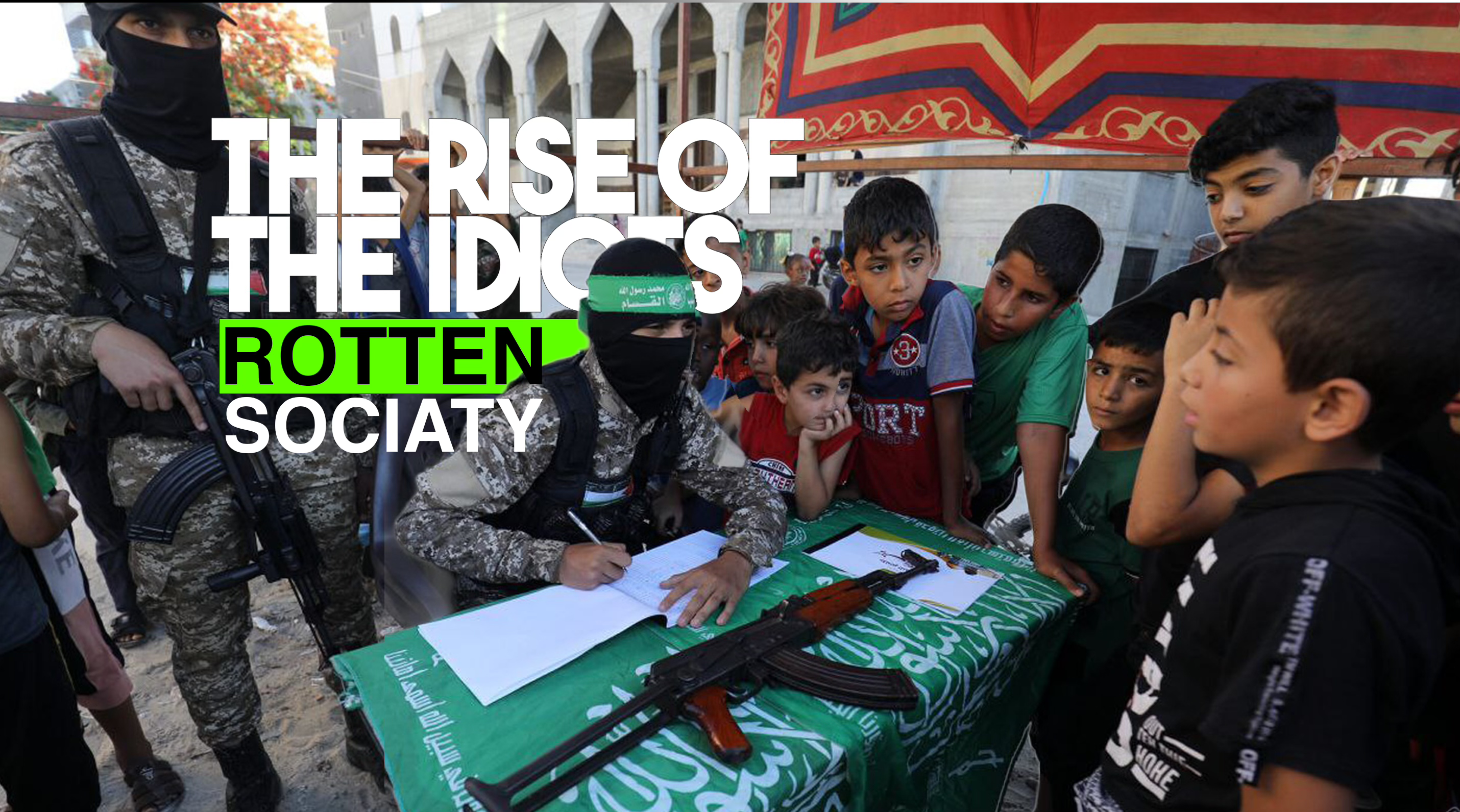
Let’s begin with the headline numbers because yes, they matter.
According to the Palestinian Center for Policy and Survey Research (PCPSR), in its poll conducted from 1-4 May 2025, some of the following emerged:
Support for the Hamas decision to launch the attack of 7 October 2023 has declined—standing at 53 % overall, with 59 % in the West Bank and 44 % in Gaza. PCPSR
On the same poll: support for disarming Hamas is still extremely low—just 18 % in the West Bank and 44 % in Gaza would back that. PCPSR
Another earlier poll (No. 95) noted that while support for the October 7 attack has dropped, an “overwhelming majority” remains opposed to Hamas being disarmed and does not believe that releasing hostages will end the war. PCPSR+1
A separate December 2023 poll found that “almost three in four Palestinians believe the October 7 attack was correct.” Reuters
So here’s what we learn: yes, support for the attack and for Hamas is dropping. But still—dropping from very high levels. The idea that “it was only a tiny minority” just doesn’t match the data.
To put it another way: the claim that “Hamas are extremists but the people are moderate” looks increasingly strained when over half of the population in some areas historically endorsed the attack, and still a large majority oppose being disarmed. Some “minority,” yes; but also far from marginal.
If you keep saying “but they’re victims too” while ignoring these figures, you’re comfortable with selective blindness.
The Hostages, the Bodies, the Public Spectacle
Now let’s go to the human element—because facts aren’t just numbers. They sting. They leave scars.
Consider the case of the Shiri Bibas family. On 7 October 2023, militants from Gaza abducted the family from their home in the kibbutz Nir Oz: Shiri (age 32), her sons Ariel (4 yrs) and Kfir (nine months), and husband Yarden. Reuters+1
Fast-forward to February 2025:
On 20 February, four coffins were handed over from Gaza to Israel as part of a cease-fire/hostage deal. They were supposed to include the bodies of Shiri and her two young sons, plus another hostage, 83-year-old Oded Lifshitz. Reuters+3Reuters+3Reuters+3
Israeli investigation found that the bodies of Ariel and Kfir were indeed identified; but the fourth coffin was notShiri’s body—it was an unidentified woman. Reuters+1
The situation: Hamas claimed she and her boys died in an Israeli air-strike; Israeli authorities say the boys were “brutally murdered by terrorists in captivity.” The Washington Post+1
A public spectacle was made of the hand-over: black coffins staged, media presence, thousands of Israelis lining the streets for the funeral procession of the Bibas family. The Guardian+2Reuters+2
Meanwhile in Gaza, the release of hostages and bodies was accompanied by crowds, a narrative of “victory” and “martyrdom,” trumpeted by militant groups. (See UN and Red Cross concern over the dignity of the handover.) Reuters+1
In other words: the hostages were abducted. Some of them were murdered in captivity. Their bodies were used in public ceremonies for propaganda. The crowds reacted. The joy, the chants, the photos—they were not hidden. They were part of the show.
Dehumanisation or Self-Dehumanisation?
Now let’s be crystal: when people cheer the captors of hostages, when bodies are paraded, when massacres are celebrated and then backed by significant portions of the population—what do we call it?
• Some will object: “You’re dehumanising Palestinians!”
• My response: they’re doing a pretty good job of dehumanising themselves.
• Yes, it’s shocking language. But facts don’t care about feelings.
The narrative of “a peaceful people oppressed” is increasingly unsustainable when the measurable indicators point to support for violence, public celebration of it, and popular rejection of disarmament.
I am not saying every Palestinian is a monster. I am saying that broad social and political behaviour of Palestinian society as measured reveals deeply troubling patterns. You cannot simply kiss it away with “context matters,” “occupation,” “victimhood.” Context matters, yes—but not when it excuses collective endorsement of atrocity.
Let’s draw a metaphor: imagine a brand of corporation that consistently profits from deadly accidents, celebrates them publicly, and polls show the majority support the model. You would not say “only the company leadership are criminals; the workforce innocent.” You’d call it a criminal enterprise. A system. A culture.
That’s where we are. The captors are not just a fringe; the support apparatus is broad. The culture of martyrdom, killing, parade-of-bodies propaganda isn’t some aberration—it is embedded.
The Good News? (Yes, there is a sliver)
Yes, there is a sliver of good news—and keep in mind, even a small shift in these sands is meaningful.
The PCPSR poll shows that support for the October 7 attack has dropped significantly, especially in Gaza, where it now stands at 44 %. PCPSR+1
Also, the poll notes that “about half of Gazans support the anti-Hamas demonstrations and almost half want to leave the Gaza Strip if they could.” PCPSR+1
These are cracks. They suggest that even within the enclave of control, fatigue, disillusionment, collapse of the myth are happening.
But here’s the punch line: even with the decline, the baseline support remains very high. And that means the claims that “the people are all peaceful victims” remain hollow.
So What’s Really Going On?
Let’s sketch the underlying architecture of this:
Hostage taking and massacre (October 7): Militants from Gaza penetrate Israeli territory, kill civilians, abduct hostages. The shock sends ripples.
Public mobilisation and propaganda: The abductions and killings are framed not as failures or aberrations but as heroic resistance. Hostages become trophies. Bodies become bargaining chips. Crowds cheer.
Mass support and polls: At its height, vast majorities of Palestinians signalled support for the attack. Support is now declining—but from a very elevated position.
Refusal of disarmament: Poll after poll shows that even if Gaza could be pacified, most residents reject surrendering arms.
Victimhood narrative: The West keeps hearing that the Palestinians are oppressed victims, that violence is a symptom. Yes oppression exists. But a victim-narrative cannot coexist with trophy-hostages and parade-of-bodies and mass polling support for atrocity without breaking.
Dissonance and despair: The cracks are showing—discontent in Gaza, anti-Hamas demonstrations, desire to flee. Still, the framework of violence remains dominant.
Put simply: this isn’t just a terrorist organisation. It’s a society tolerating and in some cases celebrating atrocity. When you dare to name the social reality, you’ll get told “you’re dehumanising them.” But marking dehumanisation requires naming it where it occurs.
Why This Matters
Because if you don’t name it, you can’t fix it. If you keep saying “but you completely misunderstand the Palestinians” while ignoring the polling, the hostages, the public cheering—you are choosing to not see.
When a society:
abets abductions,
counts its dead hostages as propaganda assets,
polls still register high endorsement of massacre,
refuses to disarm under relief deals,
…it’s not merely a “conflicted society.” It becomes a threat toward itself and to others.
For Israel, the implications are obvious: you cannot negotiate peace with an interlocutor who holds hostage-parade as triumph. For the international community: you cannot treat this as “just another occupied population,” when the population’s own attitude is an active part of the violence infrastructure.
And for the Western liberal conscience: you cannot continue preaching “empathy at all costs” when you ignore the cold reality of celebration of mass murder.
My Tone? Yes, I’m Sarcastic. Because This Is Serious.
Because every time someone whispers “be kind, don’t dehumanise,” I want to spit out: But they already did.
Because every time someone says “we must understand the root causes,” I want to retort: yes, and one of the root causes is choosing to celebrate butchery.
Because every time someone says “it’s not black and white,” I say: there is grey—but it’s bordered by red pools of children’s blood.
Sure, I’m eagle-eyed, sarcasm-armed. But I’m not inventing things. I’m reading the polls. I’m watching the hostages, the bodies, the processions. I’m noting the thousands of Israelis lining the funeral procession route for the Bibas family. The Guardian+1
Final Words: You Gave Them Justice. They Gave You Chaos.
So. Here’s the takeaway in plain language:
A significant portion of Palestinian society supported or continues to support the October 7 attack, as confirmed by reliable polls.
The case of the Bibas family, the hand-over of bodies, the public spectacle of it: all facts.
The refrain “it’s only Hamas, not the people” is increasingly untenable.
Dehumanisation? They initiated the contract. They hold the pen. You are simply recording their signature.
If you keep insisting on soothing victim-narratives while ignoring these facts, you’re not preserving empathy—you’re enabling ignorance.
Facts have no feelings. I’m only stating them.