

It Was Supposed to Be History

I’m a Polish filmmaker living in London.
For most of my life, antisemitism belonged in history books. It sat alongside the Black Death, witch trials and other things civilised societies were supposed to have grown out of. The Holocaust. Pogroms. The sort of horrors people point at and say, “Never again”, before getting on with their day.
Then I started paying attention.
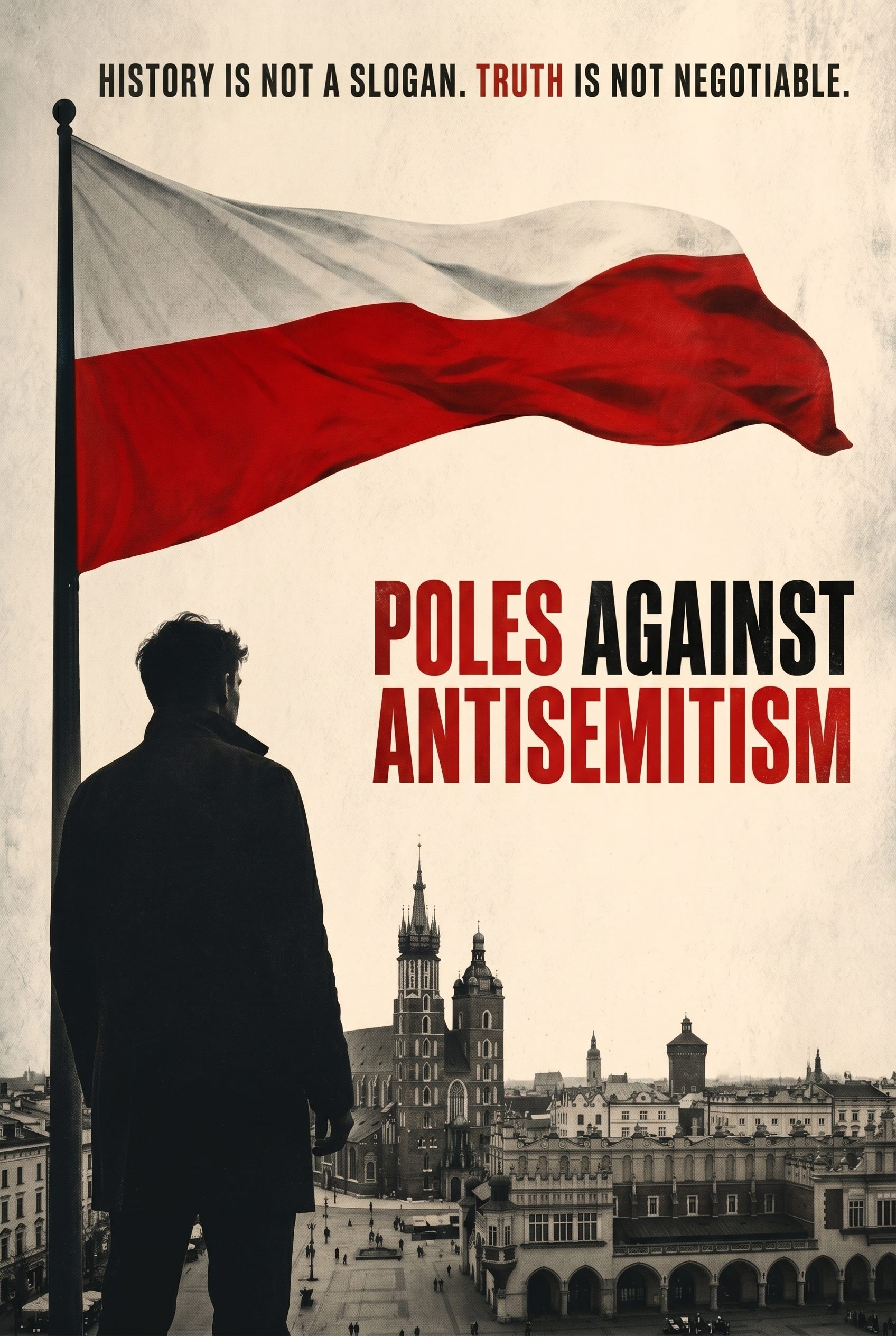
What I discovered was not that antisemitism had disappeared, but that it had adapted. It had changed its clothes. The language became more sophisticated, the branding improved, but the fixation remained strangely familiar. The double standards. The conspiracy theories. The obsession with Jews behaving in ways no other people are expected to behave.
Over the last several years I have spent thousands of hours researching antisemitism, anti-Zionism, media bias, and the way Israel is portrayed in public discourse. I have interviewed academics, historians, journalists, activists and ordinary people. I have travelled, filmed, read, debated and, perhaps most importantly, challenged my own assumptions.
The deeper I dug, the less comfortable the picture became.
I found that many people who would never tolerate prejudice against any other minority seemed remarkably relaxed when it came to Jews. I watched ancient stereotypes reappear dressed up as political analysis. I saw misinformation travel around the world at the speed of a tweet while corrections limped behind carrying a walking stick. I saw propaganda treated as journalism and journalism treated as propaganda, depending entirely on whose side it appeared to support.
And I kept asking myself the same question.
Why are the rules different here?
I am not Jewish. I was not raised in Israel. I have no family connection to the conflict and no personal reason to care more about antisemitism than any other form of hatred.
Yet here I am.
Not because I think Jews are uniquely virtuous. No group is. Humans are humans. Give any of us enough power and enough certainty and we become unbearable.
But I do believe that truth matters. Facts matter. Context matters. And prejudice does not become noble simply because it has attached itself to a fashionable political cause.
Too often, people imagine bigotry arrives wearing a swastika and shouting slogans. History suggests otherwise. It usually arrives convinced of its own moral virtue. It tells itself it is different. That this time the hatred is justified. That this target deserves it.
That is why I make films about these issues. That is why I speak out.
Not because it is easy. Not because it is popular. And certainly not because it wins you many friends at dinner parties.
I do it because history teaches a simple lesson that every generation seems determined to relearn the hard way:
When decent people decide that prejudice against someone else is none of their business, it eventually becomes everyone’s business.
Agreed, antisemitism is bad. But what is causing it to arise at this point? Where is the geographical source of antisemitism at the present time? What groups on the international scene are pursuing antisemitism and why are they doing it? Where is the money coming from to fund these international groups? Will you seek the real answers to the above questions or will the trees obscure the forest once again?