

Feeding Hamas, Starving Gaza
The West’s Greatest Moral Inversion

Seven hundred and sixty-eight days. That’s how long Israel’s been fighting what its army chief called the most complicated war in its history. Hamas started it with massacres and kidnappings; Israel’s still digging them out — literally. Roughly two hundred Hamas fighters remain trapped in tunnels somewhere under Rafah, like rats who’ve discovered that their “underground resistance” wasn’t a metaphor.
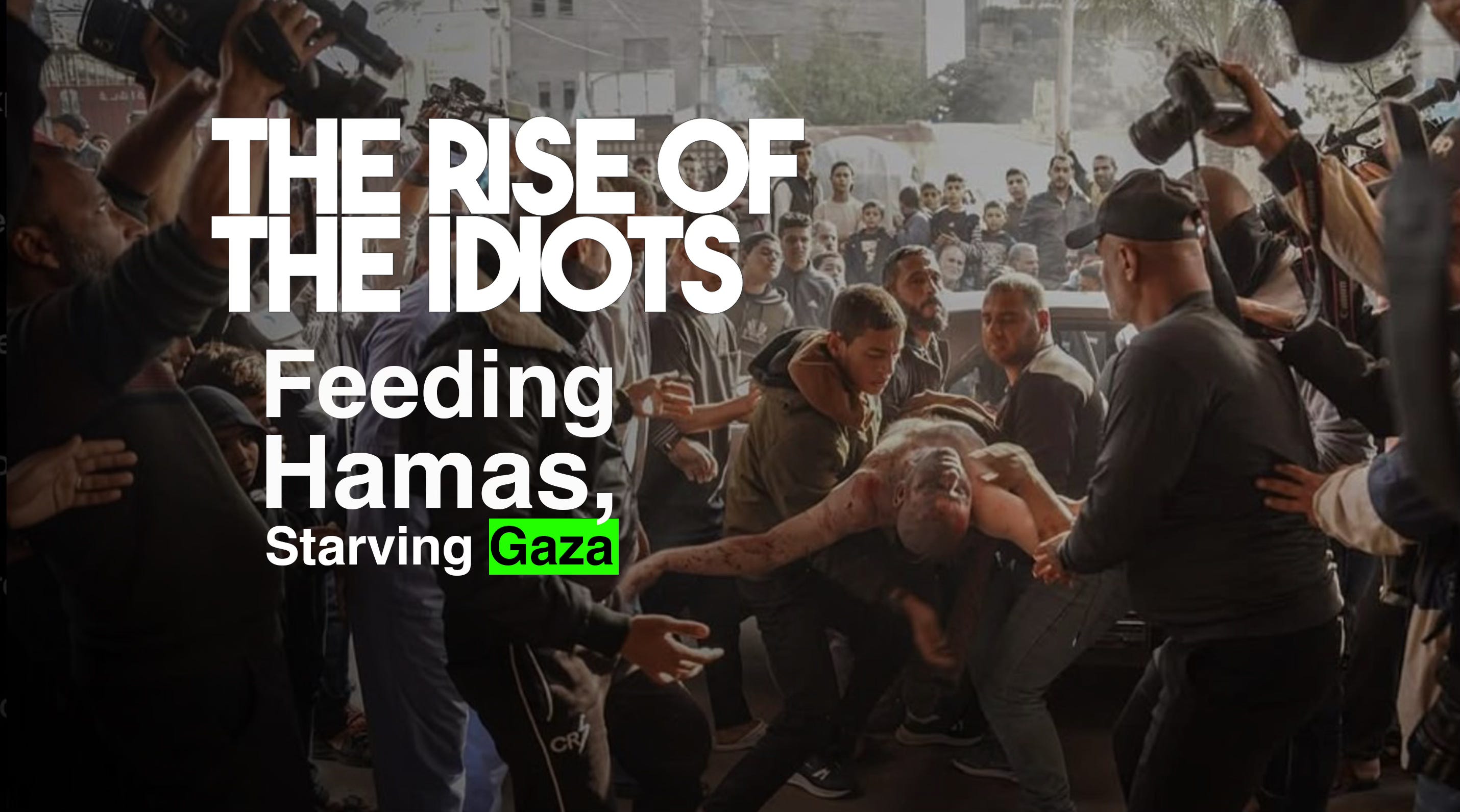
Above ground, the rockets have mostly stopped — “mostly” being the key word — and there’s an uneasy ceasefire that no one trusts. Gaza isn’t peaceful. It’s paused. The IDF controls most of the Strip. Hamas controls the press releases. And Western governments? They control the stupidity.
Because, 768 days in, the West is still repeating Hamas’s talking points like a cult that’s lost the plot but kept the hymns.
The Echo Chamber of Compassion
You’d think two years of slaughter, lies, and manipulation might have taught Western leaders a little humility. Not a chance. They still open every sentence with, “Of course Israel has the right to defend itself,” then spend the next ten minutes explaining why it shouldn’t.
It’s a moral reflex, like apologising when someone steps on your foot.
Politicians talk about “ending the cycle of violence” while spinning the same moral carousel: Hamas attacks, Israel responds, the West panics, Hamas re-arms, and the BBC calls it “a setback to peace.” The only thing cyclical is their amnesia.
Humanitarian outrage is the new international currency — you can’t buy competence, but you can buy applause.
Qatar: The World’s Favourite Firestarter
Let’s talk about Qatar — because no one else ever does without a cheque. It bankrolls Hamas, houses its leaders in luxury, runs its propaganda channel (Al Jazeera), and somehow still manages to be everyone’s “mediator.”
Qatar is the only place on Earth where you can fund terrorism in the morning and host peace talks in the afternoon without getting confused. The West calls that “diplomacy.” I call it “accessory after the fact.”
Tom Gross said it plainly this week: Qatar’s role isn’t neutral — it’s indispensable to Hamas. Without Doha’s money and hospitality, Hamas would have to fundraise like a normal NGO: bake sales, GoFundMe, hostage merch.
The Humanitarian Theatre
Meanwhile, Gaza’s humanitarian industry is booming. There’s a full-time economy in outrage — the NGOs, the UN agencies, the influencers with ring lights and tear ducts on command. They’ve all mastered the art of looking heartbroken on camera while ignoring how the aid trucks they send end up in Hamas warehouses.
Israel’s released hours of footage showing food convoys crossing into Gaza. You’d think that might count for something. But no — Western media see what they want: Israel withholding aid. Hamas could hijack a UNICEF truck live on television, and the BBC headline would be “Israeli Policies Drive Desperation.”
This is the part of the film where you’d scream at the screen: “The villain’s right there!” But the West is too busy narrating the tragedy to notice who’s writing the script.
The Ceasefire that Saves Nobody
We’ve had so many ceasefires I’ve lost count. The latest one, supposedly “holding,” is about as stable as a vegan at a barbecue. Hamas uses every lull to reload; the West uses every lull to lecture Israel.
Tom Gross hit the nail on the head: a ceasefire that leaves Hamas breathing isn’t peace, it’s procrastination. Every “pause in hostilities” is really a chance for Hamas to update its tunnels, restock its rockets, and print new T-shirts for the next march in London.
The West keeps insisting on ceasefires as if stopping Israel mid-fight will magically end the war. It’s like interrupting a surgeon halfway through a heart operation and saying, “Haven’t you cut enough?”
The Media’s War — Facts Optional
If Hamas had a marketing department, it would be headquartered at the BBC. You could make a drinking game out of their Gaza coverage — take a shot every time they say “militant” instead of “terrorist.” You’d be unconscious by paragraph three.
When Hamas blew up its own hospital car park back in 2023, the BBC blamed Israel faster than you can say “editorial standards.” That lie triggered riots across the Middle East, cancelled diplomatic meetings, and fuelled antisemitic attacks worldwide. And when the truth came out — that the rocket was Hamas’s own — the correction got less airtime than the weather.
Even after being caught, they doubled down. Their “Children of Gaza” documentary was pure propaganda: staged shots, a kid with three different haircuts supposedly filmed “in one day,” and a lead character who turned out to be the son of a Hamas politician. It was like watching a soap opera directed by Goebbels’ intern.
Jonathan Sacerdoti called it what it was: complicity. Western journalism didn’t just report Hamas’s lies; it recycled them, gave them subtitles, and sold them to the public as empathy.
The Performance of Outrage
Of course, no Western tragedy is complete without the influencers. They’re still out there — weeping on TikTok, chanting on campuses, waving signs that say “From the River to the Sea” because it rhymes and fits neatly on a tote bag.
They used to shout “Ceasefire now!” Now it’s “Israel’s breaking the ceasefire!” — same melody, different verse. They’ve built an entire identity around being professionally outraged, convinced the IDF spends its weekends bombing for sport. Hamas fires first, hides underground, and these people still manage to blame the only army that actually stopped shooting. They’re not activists anymore — they’re Hamas’s unpaid PR interns, still clocking in long after the war moved on.
David Hirsh nailed it: on Western campuses, calling Israel genocidal isn’t radical anymore; it’s a networking opportunity. Say “Israel’s defending itself,” and you’re cancelled. Say “Israel’s committing genocide,” and you’re invited to keynote Gender Studies Week.
These activists don’t want peace; they want an aesthetic. They like their revolutions photogenic — slogans, scarves, and a villain you can pronounce.
The Politicians: Saints on Payroll
Western governments still haven’t recovered from their own virtue binge. For nearly two years, they’ve condemned Israel with the enthusiasm of people who think hashtags win wars.
They fund the same UN agencies that employ Hamas sympathisers, then pretend shock when those agencies turn out to be, well, employing Hamas sympathisers. UNRWA — the humanitarian body that couldn’t tell the difference between a school and a weapons cache — is already back in business, because bureaucracies never die; they just rebrand.
Every statement from London, Brussels, or Paris reads like a competition entry in “Moral Posturing Monthly.” The tone is always identical: “We are deeply concerned… we urge restraint… we call on all sides…” They could save time by making it a macro.
Meanwhile, Hamas reads these statements from its tunnels and laughs. Why wouldn’t they? The same people funding Gaza’s reconstruction funded their last arsenal.
The Moral Inversion
Let’s be clear. It wasn’t Israel that starved Gaza. It was Hamas — by stealing aid, hoarding food, and taxing flour like it was gold dust. It wasn’t Israel that bombed hospitals; it was Hamas, by turning them into military bases. It wasn’t Israel that kept the war going; it was Western governments, by mistaking moral confusion for diplomacy.
The Begin–Sadat Center’s report from September shredded every “genocide” claim. There was no deliberate starvation, no systematic bombing of civilians. The casualty figures parroted by the UN came straight from Hamas’s “health ministry” — the world’s only medical office with a PR department.
And yet, the myth survives. Because for the Western conscience, Hamas’s narrative feels better. It flatters the ego. It lets them play saviour without understanding a thing.
Gaza’s Reality Check
Here’s what Gaza actually looks like right now: ruins, yes — but also relief. Aid finally reaches civilians without disappearing into tunnels. Shops are reopening in Khan Yunis. Kids are going back to school in tents that don’t double as armouries.
It’s fragile, messy, and real. But it’s not the dystopia the West keeps imagining. Hamas’s leaders in Doha might still dream of “resistance,” but Gazans themselves are just dreaming of normal life — which is precisely why Western activists can’t stand it. Peace ruins their business model.
Israel hasn’t declared the war over because it isn’t. Hamas hasn’t surrendered because it can’t. The world hasn’t learned because it won’t.
The West’s Greatest Talent: Self-Deception
We’ve now reached the philosophical stage of idiocy where Western elites think compassion is measured by how much you hate Israel. Every think tank, newsroom, and dinner party in London seems to have the same unwritten rule: “If in doubt, blame the Jews.”
Barry Shaw called it the sickness of Western civilisation — the need to feel morally superior to the people actually fighting evil. It’s the same syndrome that makes people tweet “All lives matter” when it’s convenient and “Death to Zionists” when it’s trendy.
Western governments, media, and activists have turned Gaza’s suffering into a virtue-signalling theme park. They feed Hamas’s narrative, starve Gaza’s truth, and then pat themselves on the back for their “nuanced understanding.”
The Punchline
After 768 days, Hamas is cornered underground, Gaza is on life support, and the West is still arguing over adjectives.
Here’s the reality: repeating Hamas propaganda doesn’t save lives. It just buys time — for terrorists. Every sanctimonious headline, every influencer’s crocodile tear, every government statement that “urges restraint” prolongs the war they claim to want to end.
If you genuinely care about Gazans, stop treating them like props. Stop feeding the monster that devoured them.
Because the truth — the one nobody in Westminster, Brussels, or the BBC wants to admit — is that Western compassion didn’t shorten this war. It fed it.
It fed Hamas.
And it starved Gaza.